
Some ABA strategies sound complicated, but the Premack Principle is not one of them. It’s basically the behavioral version of, “Do the boring thing now, so you can do the fun thing after.”
Simple, right?
But also incredibly effective.
After 10+ years in ABA, I can tell you—when a child is struggling to do something non-preferred, the Premack Principle is one of the first tools I reach for.
And the best part?
Parents use it all the time already… they just don’t know they’re using ABA.
So what is the Premack Principle, really?
Here’s the short version:
A preferred activity can motivate completing a less preferred activity.
In everyday life, it looks like:
- “First homework, then outside.”
- “First reading, then TV.”
- “Shower now, then tablet time.”
It’s not bribery.
It’s not manipulation.
It’s motivation done responsibly and predictably.
You’re not giving in — you’re teaching a child how the world works:
Sometimes we do the must-do’s before we get to the want-to’s.
(Adults do this too — we just call it “treating ourselves.”)
A real-life example from my own house
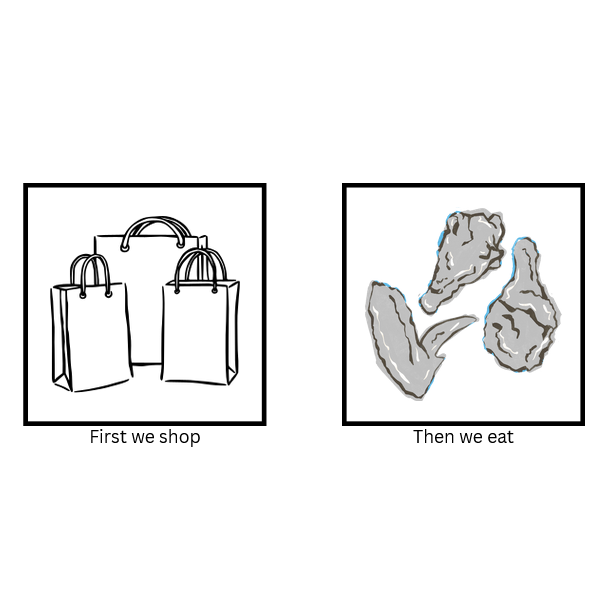
Let me be honest: shopping is not my favorite thing.
If my wife suddenly tells me, “Hey, let’s go shopping,” I’m dragging my feet like one of the kids I work with.
But when she says:
“If you go shopping with me, then we can go to your favorite restaurant after.”
Now?
Suddenly I’m putting on my shoes like I’m training for the Olympics.
The activity didn’t magically become enjoyable.
But the motivation did.
That’s exactly how kids feel when they hear:
“First we clean up, then we play.”
Why this strategy works so well
Kids are motivated by what they like — just like we are. When you attach something preferred after something non-preferred, it creates momentum.
The Premack Principle:
- Makes expectations clear
- Helps kids see the finish line
- Builds routine and structure
- Reduces power struggles
- Makes cooperation feel worth it
And honestly?
It makes life easier for everyone.
How to make it even more effective
A few things I’ve learned over the years:
- Keep it short: “First ____, then ____.”
- Say it before the task starts, not after a refusal.
- Make sure the reward actually motivates.
- Follow through every time (kids learn fast when you don’t).
- Keep your tone calm — not negotiable, just matter-of-fact.
This strategy is simple.
But when used consistently, it builds independence, cooperation, and smoother transitions across the board.
Why every ABA therapist and parent should master it
The Premack Principle doesn’t require:
- Lamination
- A behavior plan
- A complex system
- A BCBA in the room
It’s quick.
It’s natural.
It’s effective.
And it works in almost every setting.
Next time you’re stuck in a “But I don’t want to!” moment, try using the Premack Principle. You’ll be amazed at how fast motivation can turn things around.
Leave a Reply