1. Definition
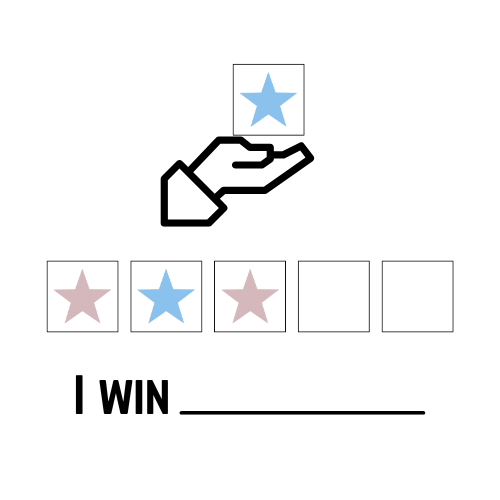
A token system is a reinforcement tool where a child earns small markers (tokens, stars, stickers, check marks) for appropriate behaviors. After earning a set number of tokens, the child exchanges them for a reward such as:
- A break
- A small toy
- A preferred activity
- Tablet time
- Snack, stickers, bubbles, etc.
Tokens act like points—the child can see their progress and knows what they are working toward.
2. Importance
Token systems help children:
- Stay motivated during work
- Increase on-task behavior
- Follow instructions more consistently
- Reduce challenging behaviors
- Learn delayed gratification
- Transition more smoothly
- Understand expectations visually
Token systems are especially helpful because they are predictable, structured, and motivating. Children clearly see:
“When I earn all my tokens, I get my reward.”
This predictability lowers frustration, builds independence, and encourages positive behavior choices.
3. Regular Example (How to Run a Token System in a Session)
This is how an RBT or parent uses a token system step-by-step during structured activities.
Step 1: Show the Token Board
Before starting an activity, explain the board simply:
- “Earn 5 stars for iPad.”
- “Fill all the spots to get bubbles.”
Keep the wording short and specific.
Step 2: Set Clear Expectations
Tell the child exactly what behavior earns a token:
- “You earn tokens for listening.”
- “You earn tokens for sitting.”
- “You earn tokens for doing your work.”
The child should know what they’re working for.
Step 3: Give Tokens Immediately for the Target Behavior
Every time the child does the expected behavior:
- Deliver the token right away
- Pair it with praise
Example:
- “Nice sitting — token!”
- “Great listening — you earned a star!”
Immediate delivery helps the child understand WHY they earned it.
Step 4: Keep the Rate of Reinforcement High (At First)
In the beginning:
- Give tokens often
- Keep it easy to earn
- Allow the child to fill the board quickly
This builds motivation and shows the child how the system works.
Step 5: When the Child Fills the Board, Give the Reward
Celebrate it clearly:
- “You filled your board! Great job — iPad time!”
Rewards should be:
- Immediate
- Exciting
- Matched to what you promised
Never delay the promised reinforcer — consistency builds trust.
Step 6: Reset the Board and Begin Again
After the child enjoys their reward, reset the board and begin a new round.
Over time, you can:
- Increase the number of tokens
- Raise expectations
- Fade the token system gradually
But early on, keep it simple and motivating.
4. Real-World Example (A Token System Used in Daily Routines)
Here’s how a token system naturally supports behavior at home or in community settings.
Example: Getting Ready for School
A child struggles with the morning routine. Parent uses a token board with five spaces and a picture of “YouTube time” as the reward.
Expectation:
“Earn tokens for getting ready.”
Tokens are earned for:
- Brushing teeth
- Getting dressed
- Putting on shoes
- Packing backpack
- Walking to the car without arguing
How it looks in practice:
Parent: “You brushed your teeth — token!”
Parent: “Great job getting dressed — another token!”
Child fills the board before leaving the house and earns 5 minutes of YouTube in the car.
This turns stressful routines into organized, positive steps.
Example: Homework Time at Home
A child resists doing homework. Parent uses a token system with three spaces and “slime play” as the reward.
Process:
Parent explains: “Finish your worksheet to earn 3 tokens for slime time.”
Child completes one row → token
Child sits appropriately → token
Child finishes worksheet → token
When all three tokens are earned:
Parent: “You did it — slime time!”
Homework becomes more manageable and predictable.
Example: At a Restaurant
The child earns tokens for:
- Staying seated
- Using quiet voice
- Waiting for food
Parent delivers tokens quietly and discreetly, then gives a small reward (like coloring time or a sticker book) when the board is filled.
This helps prevent meltdowns and supports successful community outings.
Example: Cleaning Up Toys
Parent: “Earn 4 tokens for cleaning up your toys.”
Child picks up 5 items → token
Child puts blocks in bin → token
Child finishes cleaning → 2 more tokens
When the board is full, the child chooses a reward such as:
- 10 minutes outside
- A preferred snack
- A favorite game
Cleanup becomes structured and rewarding.
Summary: How RBTs and Parents Should Run a Token System
- Keep instructions simple
- Give tokens immediately for the right behavior
- Keep early expectations easy
- Celebrate filling the board
- Deliver rewards right away
- Reset and repeat
- Use tokens during work, routines, and everyday moments
Token systems transform “hard” tasks into clear, motivating steps and help children build independence, cooperation, and self-control.